
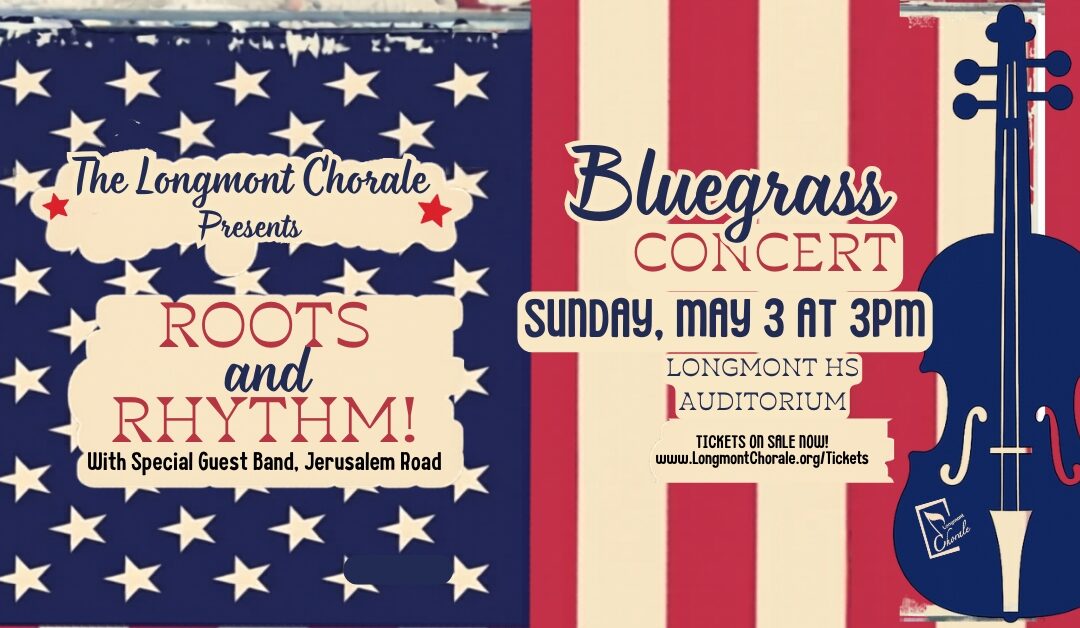
Concert Notes for:
Roots and Rhythm!
An article by Joice Gibson, Chorale Board member & our resident musicologist
We like to give you Concert Notes. Why? CPR Classical’s Scott O’Neil says it best…
“I’m convinced that the music itself has an inherent, aesthetic beauty to it, but when we understand the stories… but also the context that the music was written, not only do we understand the music better, but the music – the individual pieces themselves – sound more beautiful.”
Roots & Rhythm
Multiple and Diverse Roots
Understanding American music history (or its history in general) requires first that we acknowledge the complex and diverse history of our nation’s inhabitants. It also provides an opportunity to understand how roots and rhythm, our theme for this program, function together: roots grounding music in cultural memory and lived experience, and rhythm driving communal participation and emotional expression. Choral music serves as a powerful medium for preserving and re‑examining these traditions, allowing all of us—singers and audience alike—to engage with many of the genres that continue to shape America’s musical voice.
American music has developed (and continues to develop) through the blending of diverse cultural traditions shaped by migration, assimilation, cultural retention, geography, faith, labor, and social change. Unlike many European music traditions that emphasized written transmission, much of America’s musical identity grew from oral and vernacular practices in which songs were learned through multigenerational memory, shared in community, and adapted to new circumstances.
While Roots & Rhythm explores several of the cultural music traditions that shaped the vast American musical landscape, it must be acknowledged there are many others that are beyond the scope of this program.
Folk Traditions and Early Roots
American folk music emerged from everyday life, especially in rural and remote communities. Appalachian folk traditions developed largely from British and Scottish/Irish ballads, hymns, and dance tunes brought by settlers in the 18th and 19th centuries. Folk music emphasizes storytelling, reflecting themes of love, hardship, landscape, humor, and social relationships. These songs often feature modal melodies, simple harmonic structures, and strong rhythmic pulses suitable for dancing or unaccompanied singing. Because they were passed down aurally, folk songs remained flexible, evolving with each singer and region to reflect stylistic preferences and even textual innovations.
Shape-Note Singing and Sacred Community
Shape‑note singing represents a uniquely American sacred music tradition rooted in accessibility, participation, and communal faith. Emerging in the late 18th and early 19th centuries, the shape‑note system uses distinct notehead shapes to aid sight‑singing, allowing people with no or limited musical training to learn music quickly. This approach prioritized communal involvement over formal polish and became central to religious life in rural and frontier communities.
Published in tunebooks such as The Sacred Harp (1844), shape‑note repertory features strong, driving rhythms; open harmonies; modal melodies; and syllabic text settings. Songs are typically sung a cappella with energetic tempos and a straightforward vocal style that favors clarity and power rather than blended tone (think strident rather than pretty). Texts often focus on spiritual journey, perseverance, mortality, and ultimate redemption—imagery closely tied to both biblical narrative and the everyday early-American experience.
African American Spirituals and Sacred Expression
Spirituals arose within enslaved African American communities and represent one of the most significant contributions to American music. Rooted in Christian belief but shaped by traditional African musical practices, spirituals frequently employ call‑and‑response, repetitive forms, syncopated rhythms, and expressive vocal freedom. These features blended with European musical sounds, particularly those of American church music heard in plantation life. Spirituals often carry layered meanings, blending biblical imagery with coded messages of hope, deliverance, and resistance.
Minstrel Song and Early Popular Music
In the 19th century, American popular music was widely disseminated through minstrel shows that, while musically influential and geared to family audiences, were unfortunately rooted in racial caricature and oppression. Composers such as Stephen Foster wrote songs that became deeply embedded in American culture and were popular on minstrel-show stages (including in Europe). Often humorous, minstrel songs frequently parodied “highbrow” culture and reflected a sentimental rather than realistic view of plantation life. Foster’s melodies were memorable, accessible, and rhythmically engaging, contributing to an emerging national musical identity.
Blues and African American Vernacular Tradition
Blues is a foundational American music genre that emerged in the late 19th and early 20th centuries from African American communities in the Deep South. Rooted in work songs, spirituals, field hollers, and African musical practices, the blues gave musical form to cathartic personal expression, especially experiences of hardship, loss, resilience, and social injustice, often with a cautionary message for listeners. Musically, the genre is characterized by flexible rhythm, expressive phrasing, and the use of blue notes—inflected pitches that bend or blur traditional Western tonality. Repetitive structures, such as the twelve‑bar blues, supported improvisation and storytelling. Rhythm is central but elastic, allowing singers and musicians to stretch phrases for expressive effect. When blues elements are incorporated into choral music, arrangers often evoke the style through blue notes, syncopation, call‑and‑response textures, expressive harmony, and soloistic passages.
Gospel, Revival, and Vernacular Sacred Styles
After emancipation, spirituals continued to influence sacred music, eventually giving rise to gospel music in the late 19th and early 20th centuries. Gospel music expanded upon harmonic language, rhythmic intensity, and emotional expressiveness, as well as bringing in musical features of the blues, often encouraging a fuller tone, greater dynamic contrast, and personal interpretation.
The expansion of gospel music coincided with revival movements, urbanization, and later, the hardships of the Great Depression. Gospel songs often combined folk simplicity with rhythmic drive, emphasizing hope, perseverance, and communal strength. Musically, these styles favor steady momentum, repeated refrains, and expressive shaping, inviting performers to communicate both spiritual conviction and emotional warmth.
American Music in the Concert Hall
In the 20th century, building on the Europe-and-beyond nationalist music movements of the previous century, composers such as Aaron Copland sought to create a uniquely American concert style grounded in folk traditions and themes. By drawing on simple melodies, open harmonies, and clear textures, Copland and other composers elevated vernacular music into formal settings while also retaining its essential character. This approach validated folk and sacred traditions as foundational components of America’s musical language and identity.
Modern arrangers of choral music, such as those featured on our program, continue this practice by using contemporary harmonic language, exciting rhythms, and textural variety to reinterpret traditional material. The result is repertoire that connects historical genres with modern choral technique, requiring singers to balance ensemble precision with stylistic awareness and expressive authenticity.
Bluegrass and Appalachian String Band Tradition
Bluegrass is a distinctly American musical style that developed in the mid‑20th century, rooted in earlier Appalachian folk traditions, Anglo‑Celtic balladry, African American blues elements, and dance music. Popularized by musicians such as Bill Monroe, bluegrass drew on older string‑band practices (such as barn-dance music) while establishing a new, highly rhythmic ensemble sound. Characteristic features include driving tempos, strong metric pulse, syncopation, and clear duple meter, all of which give the style its forward momentum and propulsive energy.
Vocally, bluegrass singing emphasizes direct, unembellished tone, often featuring close harmonies and a piercing timbre often described as the “high lonesome sound.” Texts frequently address themes of home, faith, hardship, rural life, and the natural landscape, tying the music closely to regional identity and to American country music in general.
The musical characteristics of bluegrass can be heard in many of the song arrangements featured on the program through instrumental accompaniment, rhythmic features, and vocal singing style.
Purchase your tickets for Roots and Rhythm! when you visit our Tickets page today!
Please join our Email Audience to receive updates about our performances and other activities throughout the season. Sign up on our Home or Contact Us page today!
##
The Longmont Chorale is a nonprofit Longmont choral group, an SATB choir which performs four major concerts in Longmont each season. Concert tickets and information are both available at LongmontChorale.org/Tickets.
Like this post? Share it with a friend, using the social media bar on the side of this page (desktop) or below (mobile).
